What if your workout could challenge you without making every step feel like a leap? If high-impact exercise feels uncomfortable or intimidating, you’re not alone. Could low impact personal training Largo residents feel good about also support real progress? Absolutely. Low impact describes the way you move, not how much effort you put in. With thoughtful exercise choices and coaching, you can build strength and consistency around your current ability and busy schedule.
Choosing between solo workouts, one-on-one personal training, and small-group coaching can take time you don’t have. This guide makes the comparison simple. You’ll see how these options differ, what supportive coaching can look like, and how TrYumph Fitness’s personal and small-group training can help you find a practical starting point in Largo. You don’t need to go all-out on day one. Start with movement that feels manageable, then build from there.
Key Takeaways
- Low impact personal training Largo can be tailored to your current ability and confidence, without requiring an intimidating start.
- Low impact doesn’t mean low effort. Exercise choices, pace, resistance, and rest all shape how challenging a workout feels.
- Compare one-on-one and small-group coaching by the kind of attention, accountability, and social support you prefer.
- Use your goals, schedule, and comfort level to choose a realistic training format.
- Tailored workouts, nutrition guidance, and ongoing accountability can support a practical fitness routine.
What Low-Impact Personal Training in Largo Means, and Who It Can Help
If running, jumping, or fast-paced classes feel like too much for a starting point, you can still build a meaningful fitness routine. Low-impact exercise reduces jarring movements, such as repeated jumps, while letting you adjust the effort. The goal isn’t to avoid challenge. It’s to find movement you can approach with confidence and repeat in real life.
Low-impact training limits jarring movements while allowing effort to be adjusted to your ability and goals. A session might include controlled strength exercises or steady walking. The right choices depend on your needs and the workout, not just the “low-impact” label.
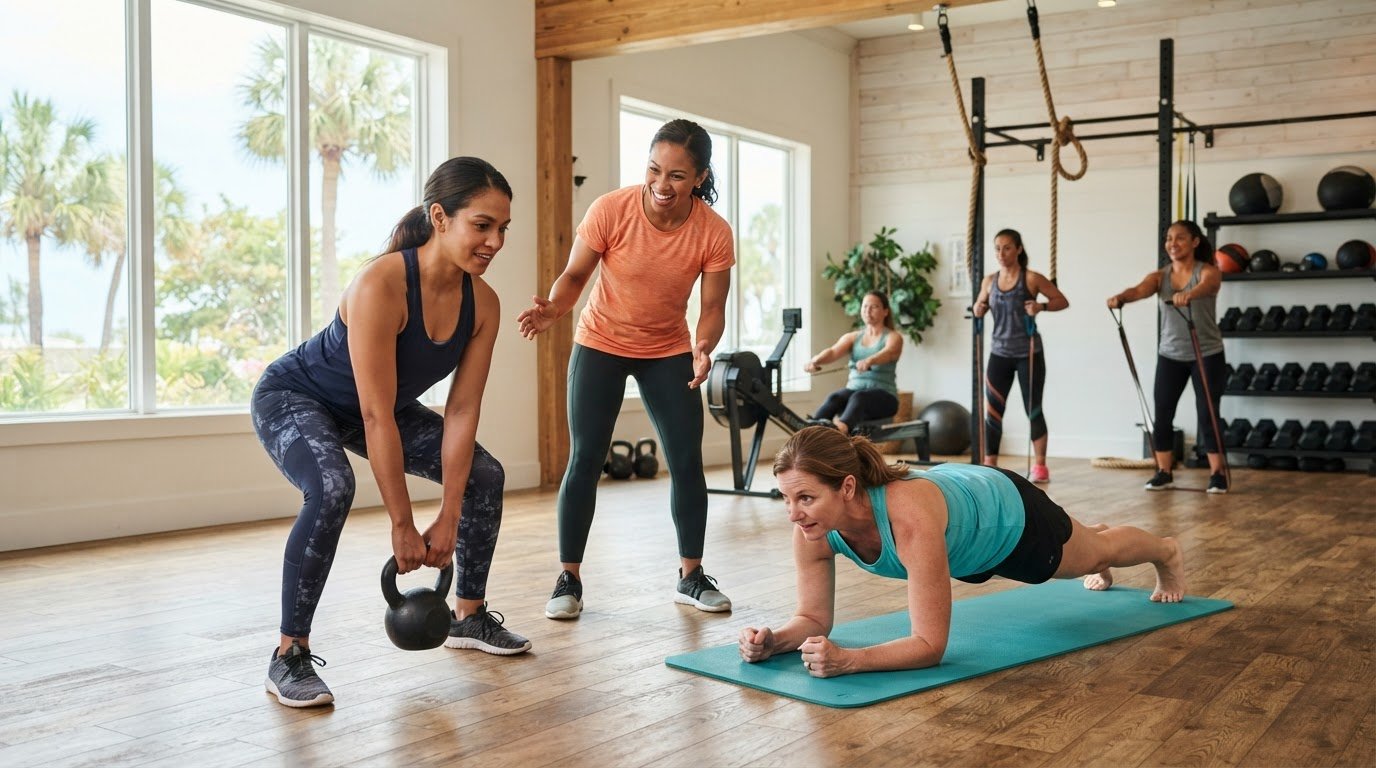
A personal trainer guides exercise toward your goals and abilities. For a foundational overview, see Personal trainer. With low impact personal training in Largo, you can work with a coach to choose movements and adjust session difficulty to suit your starting point. Low impact doesn’t automatically mean easy or ineffective. Changing pace, range of motion, resistance, repetitions, or rest can make a movement more or less challenging without adding jumps.
Is low-impact training a good fit for beginners or returning exercisers?
It can be a welcoming place to begin if you’re new to exercise, returning after time away, or simply more comfortable with a steady pace. Busy adults may also prefer movements that feel manageable around work, family, and everyday responsibilities. A coach can adjust an exercise by reducing its range, slowing the pace, or choosing a different movement. You can build familiarity before deciding how to progress. If you have a health concern or questions about what activity is appropriate for you, speak with a qualified healthcare professional.
What can low-impact personal training help you work toward?
Training can support goals such as building consistency, strength, confidence, and general fitness. Progress depends on what you’re working toward, how regularly you attend, and whether your coaching matches your current ability. A coach can clarify your next step, then adjust the plan as your capacity and confidence grow.
Think of your body as an engine that powers your day. A steady, appropriately paced routine is like maintaining that engine: you’re practicing movement and building capability over time, not trying to redline it in every session. Start by naming one goal that matters in daily life, such as feeling more confident carrying groceries or setting a regular time to move. Share it with your coach so your training has a practical direction.
Can Low-Impact Workouts Still Challenge You? How Intensity Works
Yes. Low impact describes the movement’s jarring effect, not how hard your body is working. A controlled squat or brisk walk can feel demanding, while a jump-heavy movement can be performed at an easier pace. Impact and intensity are separate parts of a workout: impact describes the movement, while intensity describes how much effort you put in.
That distinction gives a coach room to shape a session without relying on jumps or fast transitions. Difficulty can change through the pace of a movement, the resistance used, the number of repetitions, the rest between efforts, or the exercise itself. A slower tempo or shorter rest may raise the challenge; a lighter load or longer pause may make it more manageable. The right adjustment depends on the person and the session.
Use your breathing as a simple check. The CDC’s guide to measuring exercise intensity explains the talk test: at a moderate effort, you can talk but not sing. If speaking feels difficult, ease your pace and notice how you feel. It’s a helpful cue, not a rigid rule or a substitute for personalized guidance.
How can a coach scale a workout to your starting point?
A coach can adjust the range of a movement, slow its pace, change resistance, or add rest so the exercise suits your starting point. If a movement feels manageable, progress can come from changing one variable at a time, such as adding resistance or completing another repetition. Think of it like climbing stairs: take one steady step, find your footing, then build from there. This makes it easier to notice what feels appropriately challenging.
What should you do if an exercise feels uncomfortable?
Pause and tell your coach what you’re experiencing. They can modify the movement or choose a different exercise rather than asking you to push through discomfort. Notice what changes when you stop or adjust. For new, persistent, or concerning symptoms, seek medical guidance before continuing. Open communication helps your coach make thoughtful changes while keeping the session focused on your goals.
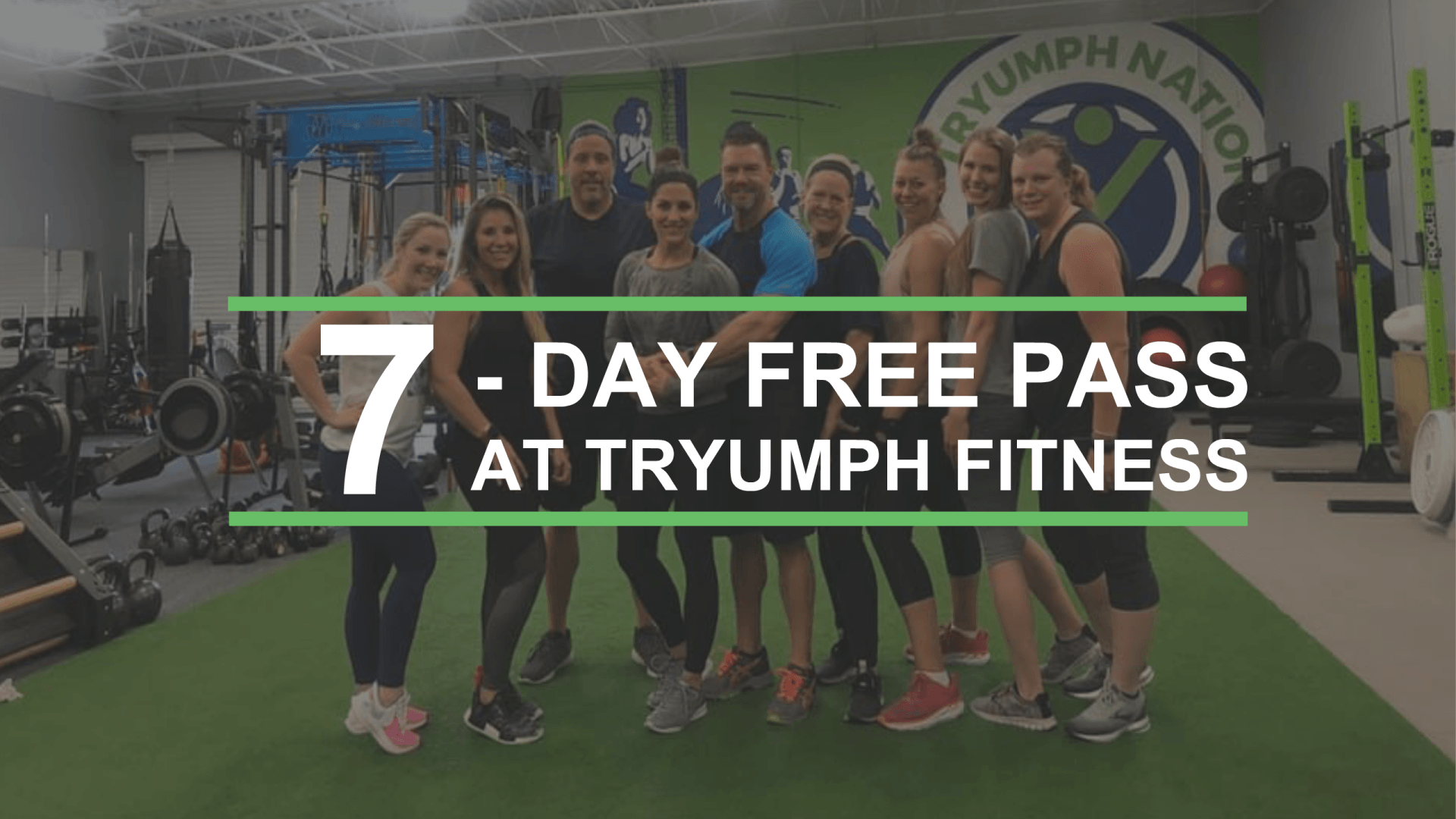
With low impact personal training in Largo, coaching can help you find a level of effort that feels purposeful and manageable. If you’d like to experience a supported starting point, explore a training trial.
Personal Training or Small-Group Coaching in Largo: Which Fits You?
Both one-on-one personal training and small-group coaching can provide guidance and accountability. The difference is where the focus lands: on your individual needs or on training alongside others. If you’re comparing low impact personal training options in Largo, consider which setting would help you feel comfortable, stay engaged, and make time for movement in your week.
| What to consider | One-on-one coaching | Small-group coaching |
|---|---|---|
| Attention | Focused on your goals and starting point | Coach guidance shared within a group setting |
| Accountability | Individual check-ins and direction | Coach support plus the motivation of training with others |
| Social feel | More personal and focused | More community and shared encouragement |
When might one-on-one personal training suit you?
One-on-one coaching may fit if you want a plan shaped around your goals, comfort, and current ability, or you feel more at ease with focused guidance. It also gives you dedicated time to discuss what feels manageable and build accountability around your routine. Readers in nearby Pinellas County communities can explore this personal training option as a place to begin.
When might small-group training feel like a better fit?
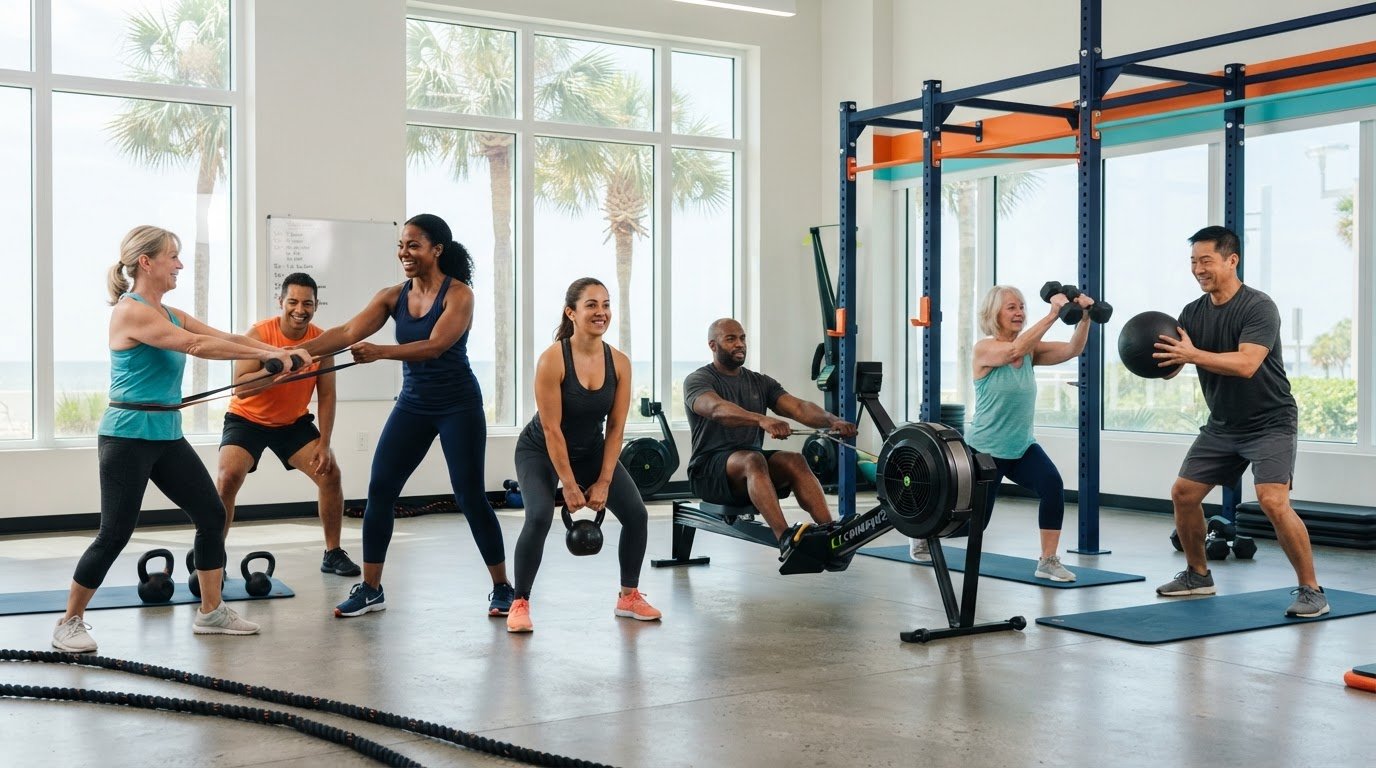
If encouragement from others helps you stay engaged, small-group coaching can bring a sense of community to your workouts while a coach provides guidance. If you prefer a quieter, individual focus, one-on-one training may feel more comfortable. Think about which environment you’re more likely to return to during a busy week. TrYumph Fitness offers both formats, so you can consider which coaching style fits your preferences.
There’s no universally right format. Your goals, confidence, schedule, and preferred level of social interaction all matter. If you live in Largo, Seminole, Clearwater, Pinellas Park, Indian Rocks Beach, or Madeira Beach, picture a typical training day: Would personal attention help you feel supported, or would shared energy make exercise easier to stick with? Choose the setting that feels realistic for your life.
How to Choose Low-Impact Coaching That Fits Your Schedule and Goals
The best plan is one you can realistically return to, not the one that sounds toughest on paper. Before choosing low impact personal training in Largo, take a few minutes to match your needs with the support and time you can make room for. A clear starting point can make an introductory conversation more useful and help your coach tailor the experience.
- 1. Define what you want from training. Name a goal that matters in daily life, such as building strength, feeling more confident with movement, or creating a consistent routine. Note any movements you prefer or want to approach gradually.
- 2. Decide what support feels right. Consider whether focused one-on-one guidance or the encouragement of a small group would help you feel more at ease and accountable.
- 3. Look at your real schedule. Think about work, parenting, and other commitments. Identify times you could reasonably protect for exercise, rather than planning around an ideal week that rarely happens.
- 4. Choose a first step. Bring your goals, preferences, and schedule to an introductory conversation, then use them to shape a manageable starting plan.
What should you consider before choosing a training format?
Be honest about how much coaching attention you want and how comfortable you feel exercising around other people. Then weigh that against the time you can set aside without adding pressure to a full week. A realistic routine that fits your responsibilities is more useful than choosing the hardest option and struggling to keep it going. Consistency begins with a plan you can repeat.
How can you make a first session feel more approachable?
Arrive ready to describe your exercise experience, what you hope to work toward, and which kinds of movement feel comfortable or unfamiliar. You don’t need a perfect explanation; clear, everyday language is enough. During the session, speak up if an exercise feels too difficult or uncomfortable so your coach can adjust it. Your feedback helps turn a general plan into coaching that better fits you.
Quick checklist: Before you begin, make a note of:
- The main goal you’d like your training to support.
- Whether individual attention or group encouragement feels more comfortable.
- The time you can realistically set aside in a typical week.
- Any movement preferences you’d like your coach to know.
Ready to turn those notes into a starting point? Explore a training trial and take a practical next step toward coaching that fits your life.
Start Low-Impact Personal Training in Largo With Support That Meets You Where You Are
A supportive fitness routine should work with your life, not demand that you rearrange everything around it. TrYumph Fitness offers one-on-one and small-group coaching for busy adults in Largo, Seminole, Clearwater, Pinellas Park, Indian Rocks Beach, and Madeira Beach. Both formats can provide a starting point for low-impact training, with guidance shaped around your goals, current ability, and preferred coaching environment.
Coaching can connect the workout to the rest of your routine, too. Tailored workouts give you a practical plan for movement, while nutrition guidance and ongoing accountability offer support beyond each session. That can make your next step clearer, especially when work, family, and everyday responsibilities compete for your time.
What support does TrYumph Fitness bring to the coaching experience?
TrYumph Fitness is a family- and veteran-owned business serving the Largo area. Founder Matt O’Brien holds CSCS and NBC-HWC credentials and brings more than 28 years of human-performance coaching experience, along with over 25,000 coaching hours.
Credentials and experience matter, but so does how coaching feels. The approach is inclusive and encouraging, with coaching that can adapt to your starting point rather than pressuring you to keep up or prove yourself. Share what you’re working toward, what feels manageable, and what support helps you follow through. That conversation helps make training feel like a partnership.
Take a simple next step toward a more active routine
You don’t need to arrive with a perfect plan. Choose one goal you’d like to work toward, such as building a regular movement habit or feeling more confident with strength training. Then consider whether you’d feel more comfortable with individual attention or the encouragement of a small group. Those choices can help you start a useful conversation about the coaching approach that fits you.
A free trial offers a way to explore the coaching experience and decide whether it feels like a practical fit. Take one small step today: start a free training trial. Bring your questions, goals, and the schedule you’re working with. You can build from there, at a pace that respects your life.
Build a Routine That Moves With You
Low-impact exercise can still be purposeful and challenging. The key is choosing movements and effort that suit your starting point. One-on-one coaching offers focused guidance, while small-group training adds shared encouragement. The best fit is the one that works with your goals, comfort, and everyday schedule.
For low impact personal training in Largo, TrYumph Fitness offers personal and small-group coaching to residents of Largo, Seminole, Clearwater, Pinellas Park, Indian Rocks Beach, and Madeira Beach. Founder Matt O’Brien holds CSCS and NBC-HWC credentials. Coaching includes tailored workouts, nutrition guidance, and ongoing accountability, so support can extend beyond a single workout.
You don’t need to have everything figured out before you begin. Pick one achievable goal, think about the type of coaching that would help you feel supported, and take a first step. Start your free training trial and explore a coaching approach that fits your life. Progress begins with showing up, one manageable step at a time.
Frequently Asked Questions
What is low-impact personal training?
Low-impact personal training uses exercises that reduce jarring movements, such as repeated jumping, while still allowing you to work at a meaningful effort. A coach can adjust your movement choices, pace, resistance, and rest to fit your current ability and goals. For example, controlled strength exercises may feel challenging without requiring jumps. Low impact describes how you move, not a fixed level of difficulty.
Can low-impact workouts still help you build strength and fitness?
Yes, low-impact workouts can support strength and fitness when exercises and effort are matched to your goals. A coach may adjust resistance, repetitions, pace, or rest to make a session more or less challenging. Progress can be gradual, like climbing a staircase one steady step at a time. Results vary with your goals, consistency, and coaching, so focus on a routine you can keep returning to.
Is low-impact personal training a good option for beginners?
Yes, it can be a comfortable starting point if you’re new to exercise or returning after time away. A coach can choose movements that feel approachable and adjust their range or pace as you get familiar with them. You don’t need to arrive already fit or know the exercises. Share your experience, goals, and movement preferences so the coach can help shape a suitable starting plan.
What is the difference between personal training and small-group training?
Personal training focuses coaching on your individual goals and starting point. Small-group training brings coaching together with the encouragement and accountability of exercising alongside others. Both formats provide guidance. Consider whether focused attention or a shared group environment would help you feel more comfortable and consistent. The right fit depends on your goals, schedule, and the kind of support that motivates you.
How often should I do low-impact personal training?
There isn’t one ideal training frequency for everyone. Your goals, current activity, schedule, and recovery all matter, so begin with a routine you can realistically maintain and adjust with your coach. The CDC’s broad adult activity guidance recommends at least 150 minutes of moderate-intensity aerobic activity weekly, plus muscle-strengthening activity on two or more days. That guidance includes activity beyond personal training sessions, too.
Can low-impact personal training work with a busy schedule?
Yes, coaching can be planned around the time you can realistically protect for exercise. Think about your work and family commitments, then identify when movement could fit into a typical week. Share that availability with your coach, along with the type of support you prefer. A manageable routine that fits your real schedule is a more practical starting point than an ambitious plan that’s hard to repeat.
How do I try personal training in Largo?
Start by identifying one goal, such as building strength or creating a regular movement routine, and decide whether one-on-one or small-group coaching feels more comfortable. TrYumph Fitness offers a free trial to help you explore its coaching approach. The family- and veteran-owned business serves Largo, Seminole, Clearwater, Pinellas Park, Indian Rocks Beach, and Madeira Beach. Bring your goals and questions, then take one manageable first step.
Article by
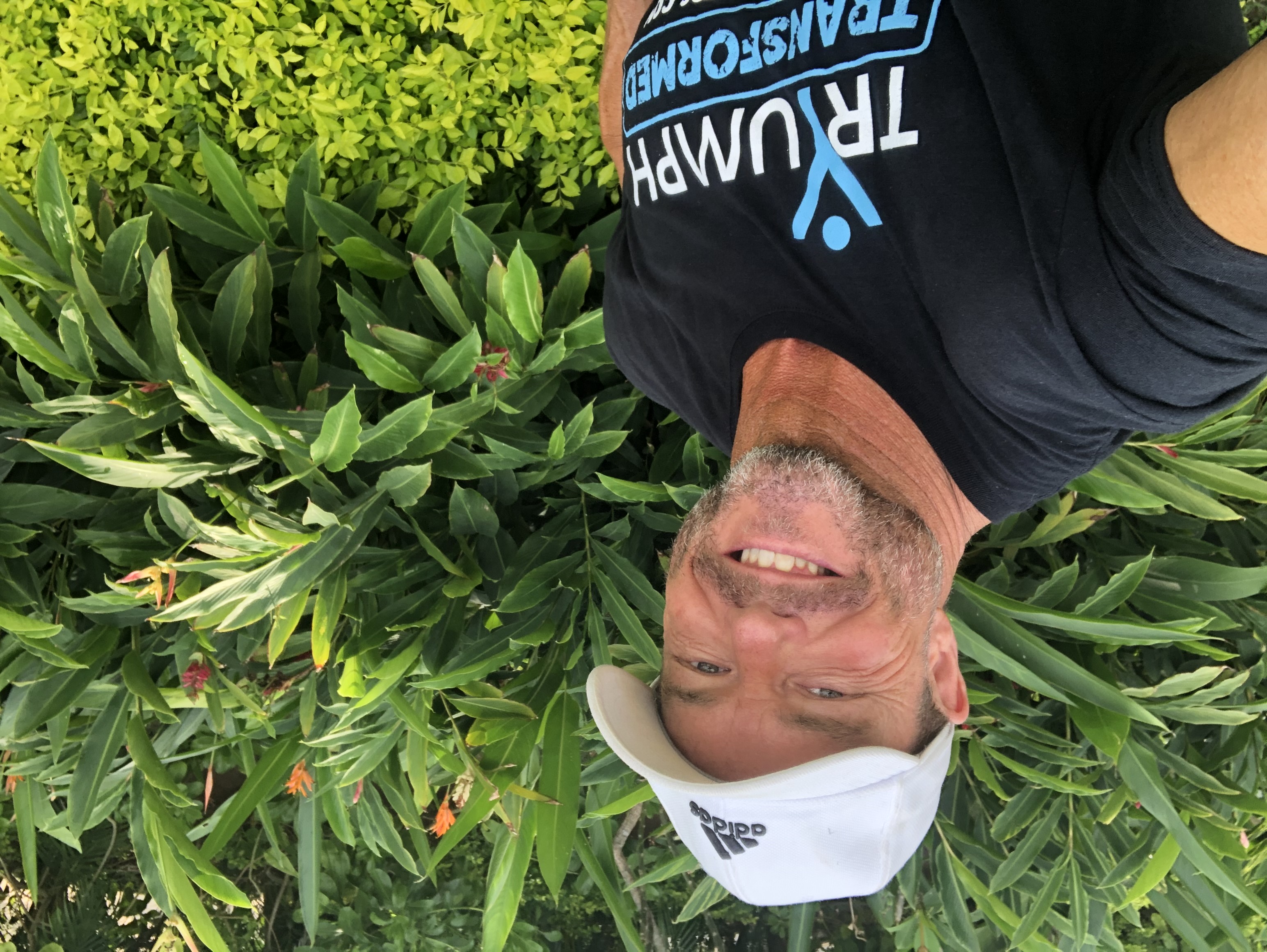
Coach Matt O'Brien
Coach Matt O'Brien is the founder of TrYumph Functional Training and TrYumph KidFit, where he has helped thousands of adults, children, and families build stronger, healthier, and happier lives through science-based health coaching, personal training, and small group training since 1998. With more than 25 years of coaching experience and over 25,000 hours working one-on-one and in small-group settings, Matt specializes in helping busy adults improve strength, energy, weight loss, nutrition, and long-term health through practical, sustainable lifestyle change.
Matt is a National Board Certified Health & Wellness Coach (NBC-HWC), Certified Strength and Conditioning Specialist (CSCS), Precision Nutrition Level 1 Coach (PN1), and Master Health Coach. His expertise spans strength training, nutrition coaching, healthy habit formation, performance optimization, and healthy aging, helping clients build resilience and enjoy a higher quality of life for years to come. He is also the author of THE MAGIC PILL and FITNESS FUEL (Cookbook) and is passionate about translating complex health and longevity science into simple, actionable strategies that busy people can apply in everyday life.
Through TrYumph KidFit, Matt is equally committed to improving kids fitness, confidence, athletic development, and lifelong healthy habits by creating fun, encouraging environments where children can thrive physically, mentally, and socially.
Matt's coaching philosophy is built on simple beliefs: movement is medicine, consistency beats perfection, and sustainable habits create extraordinary results. His mission is to help people live longer, healthier, happier lives through coaching, community, and caring.
When he's not coaching at TrYumph, Matt enjoys spending time with his wife and two sons, continuing his education in health and longevity science, and creating educational content that empowers people to take control of their health.