Your first postpartum fitness goal is recovery, not a race back to your pre-pregnancy weight. For how to lose baby weight postpartum in Largo, start with gentle movement when you're ready, and get your physician’s or midwife’s clearance before returning to exercise; wait until your six-week checkup before trying to lose weight. A gradual return gives your body room to heal and rebuild strength.
It’s understandable to want a clear timeline, especially when sleep, feeding, and daily routines have changed overnight. But postpartum weight changes happen at different rates, and the scale is only one part of recovery. This guide explains when to resume activity, what weight changes may look like, and how to build practical meals that support breastfeeding and healing. You’ll also find recovery-focused goals to help you move forward with patience, confidence, and a plan that fits real life.
Key Takeaways
- Think in terms of gradual progress: returning to pre-pregnancy weight may take 6 to 12 months after delivery, and postpartum changes vary from person to person.
- Build activity toward 150 minutes per week of moderate-intensity aerobic exercise, the goal recommended by the U.S. Department of Health and Human Services.
- If you’re breastfeeding, focus on balanced meals and enough fluids rather than drastic calorie cuts; your nutrition needs can differ from before pregnancy.
- Make busy days easier with simple meals built around fruits and vegetables, whole grains, and satisfying snacks.
- Track recovery wins beyond the scale, such as rebuilding strength, moving comfortably, and feeling more confident in everyday activities.
1. Postpartum Weight Loss: When Can You Start Dieting After Pregnancy?
There isn’t one exercise start date that suits every delivery. After an uncomplicated vaginal birth, gentle movement may feel right when you’re ready, but get clearance from your physician or midwife before returning to an exercise routine. Recovery after a cesarean section may require a different pace, so follow your clinician’s advice rather than relying on the calendar alone.
At your six-week checkup, discuss exercise and weight-loss plans, including any pain, bleeding, pelvic heaviness, or movement limits. Postpartum patients are advised to wait until this checkup before trying to lose weight. That doesn’t mean you need to start dieting then. Begin with regular, nourishing meals, and avoid drastic restriction while your body is recovering and, if applicable, producing breast milk.
Build activity in small steps after clearance. Start with a comfortable walk or brief periods of movement spread through the day, then add time or effort as recovery allows. The U.S. Department of Health and Human Services recommends 150 minutes per week of moderate-intensity aerobic exercise. Treat that as a goal to build toward, not a first-week assignment.
Early sessions can focus on breathing, gentle core engagement, pelvic floor awareness, and everyday movements such as standing from a chair. Keep the effort easy enough that you can talk comfortably. Delay high-impact exercise, heavy spinal loading, and advanced abdominal exercises until your core and pelvic floor can manage them. Stop and follow up with a healthcare provider if exercise causes pain, dizziness, unusual bleeding, or pelvic pressure.
In Largo, the cost of postpartum physical therapy or weight-management care depends on the provider, type of care, and your insurance plan. Check your benefits for covered services, copays, deductibles, and any authorization requirements before scheduling.
For postpartum exercise in Largo, consider a gentle walk on an even public park path, a mom-and-baby fitness class, or small-group training after medical clearance. Choose an option that fits your recovery, comfort, and need for support. Keep the first goal simple, such as completing a relaxed walk without symptoms.
Keep a brief record of activity, symptoms, and energy after each session. If a walk leaves you more sore or causes pelvic heaviness, scale back and seek medical guidance before progressing. A gradual return supports recovery while helping you build a routine you can maintain.
2. Postpartum weight-loss timeline
Postpartum weight loss often unfolds in stages, not as a steady weekly drop. Immediately after delivery, women lose an average of 10 to 13 pounds as the baby, placenta, and amniotic fluid are delivered. Another few pounds may come off during the following week as the body sheds retained fluid. These early shifts are not the same as losing body fat, so don’t treat them as a measure of long-term progress.
By six weeks after childbirth, most women have lost about half of their baby weight. That’s a general milestone, not a deadline. The remaining pregnancy weight may come off gradually as appetite, sleep, activity, and daily routines change. A reasonable longer-term goal is returning to pre-pregnancy weight within six to 12 months after delivery. Focus on your overall trend rather than a single weigh-in.
A gradual pace matters. Instead of skipping meals, build a routine around regular eating, protein-rich foods, vegetables, whole grains, and manageable activity. For example, keep yogurt, fruit, or a prepared meal on hand for busy days when cooking is difficult.
Several factors can shift the timeline. Hormones, stress, sleep, breastfeeding, appetite, and recovery can all affect weight changes. Sleep is one example: women sleeping less than five hours at six months postpartum have up to three times the risk of retaining more than 11 pounds. That doesn’t mean one difficult night determines your progress. It shows why recovery and practical routines matter alongside food choices.
Weigh yourself under consistent conditions, such as using the same scale at a similar time of day, and review the pattern over several weeks. Notes about meals, sleep, movement, and energy can help you spot what supports your routine. Weight is only one source of feedback; strength, comfortable movement, and steady energy are useful progress markers too.
For added structure, a Weight Loss Challenge can help turn healthy eating and activity into a more consistent routine. If a guided starting point would help, explore a fitness training trial and choose steps that fit your recovery.
3. Weight loss while breastfeeding
Breastfeeding uses extra energy, so some mothers notice postpartum weight loss while feeding, but it doesn’t happen the same way for everyone. Feeding frequency, appetite, sleep, recovery, and daily movement all affect changes on the scale. Focus first on regular meals and how you feel, not aggressive calorie cuts. Your appetite may also shift as feeding routines change.
Milk production adds energy needs. Exclusively breastfeeding women need about 500 more calories per day than before pregnancy. Another estimate for breastfeeding people is 340 to 400 more calories a day than before pregnancy. These figures differ, so use them as context, not a personal meal prescription. Feeding pattern and individual needs matter. Build meals around protein, whole grains, fruit, and vegetables, such as eggs with toast or yogurt with fruit.
Timing matters before reducing food sharply. Wait until your baby is at least 2 months old and your milk supply has normalized before making drastic calorie cuts. A balanced diet and regular moderate exercise can support weight loss for people who are overweight while breastfeeding without affecting breast-milk quality or quantity. A brisk walk can be a practical way to add movement once you’re cleared to exercise.
Keep the pace measured. Losing about 670 grams per week while breastfeeding should not affect milk supply or health. If you’re losing faster, feeling unusually depleted, or noticing a change in feeding, increase nourishment and discuss the change with your healthcare provider. A simple meal log can help: note what you ate, feeding patterns, energy, and how you feel during the day.
Hydration is another everyday support. Drink when thirsty, and keep a glass of water nearby during feeds. If remembering is difficult, pair a drink with each breastfeeding session. Prepare easy meals ahead, such as a bean-and-rice bowl with vegetables or a sandwich with lean protein. These choices make regular eating easier on busy days.
Caffeine also deserves attention while breastfeeding. Keep intake below 200 milligrams, and notice whether your baby seems unsettled after you consume it. Alcohol is separate from calorie planning; avoid treating it as a meal replacement, and include feeding and recovery in decisions about drinking. For weight loss, choose habits you can repeat: regular meals, a comfortable walk, and gradual changes rather than severe restriction.
4. Quick, nutritious meals for new parents
Make meals easier with a simple plate formula: fill half with fruits and non-starchy vegetables, one quarter with whole grains, and the remaining space with protein. Think eggs, brown rice, and vegetables, or beans, whole-grain toast, and fruit. This approach is more practical than trying to cook a complicated recipe between feeds, work, and household tasks.
Keep a short list of flexible ingredients for quick meals. Combine canned beans with microwaveable brown rice and frozen vegetables; add eggs to toast with fruit; or pair yogurt with oats and berries. Keep ready-to-eat options visible in the fridge so a busy afternoon doesn’t turn into a missed lunch. Aim for five portions of fruit and vegetables per day, using fresh, frozen, or canned choices.
Plan smaller meals and snacks if full meals are hard to fit into your routine. One approach is five to six small meals a day, with healthy snacks in between. For example, prepare cheese and fruit, hummus with vegetables, or yogurt with oats. Protein can make a meal or snack more satisfying, while whole grains provide an easy base.
Hydration supports daily physical needs, especially alongside physical activity and breastfeeding. Aim for 12 cups of fluid per day, and keep a refillable bottle near your usual feeding spot. Water is a simple default. If you’re preparing food in advance, place a drink beside each packed meal as a reminder to sip throughout the day.
Reduce empty calories by cutting back on added sugars and solid fats, not by eliminating whole food groups. Swap a sugary drink for water, or choose fruit instead of a sweet snack. Treat that finding as one possible aid, not a meal plan or a promise.
Personalize your routine around recovery, appetite, breastfeeding, food preferences, and available time. Write down three quick breakfasts, lunches, and dinners you can repeat, then keep the ingredients ready. Adjust portions based on hunger and energy rather than chasing a specific number of pounds. Nutrition and physical activity work together, but exercise intensity should match your recovery and medical clearance.
5. Recovery-focused goals beyond scale weight
During early postpartum recovery, prioritize strength, function, and overall well-being over immediate weight loss. The scale can’t show whether carrying your baby feels easier or everyday movement feels more comfortable. Choose a useful daily marker: notice how breathing, walking, or standing from a chair feels, then record your progress without making weight after pregnancy your only measure.
Start with breathing and gentle coordination. Deep-breathing practice for 5 to 10 minutes, 2 to 3 times per day can help you reconnect with your body. Pair a slow inhale with a relaxed rib cage, then exhale without bracing hard. Think of this as resetting a foundation before adding more activity. Keep the movement comfortable, and stop if it brings pain or pressure.
The pelvic floor and abdominal muscles also deserve gradual attention. Kegels can begin with three sets of 10 to 15 repetitions per day, focusing on a gentle squeeze and full release. Diastasis recti means separation of the rectus abdominis muscles during pregnancy. If your abdomen domes noticeably during movement, or you experience leaking, pelvic heaviness, or pain, pause that exercise and seek clinical guidance.
Return to strength work step by step. Early training can emphasize breathing mechanics, pelvic floor and core activation, foundational movements, and walking. As recovery allows, progress from stabilization-focused work toward strength-focused activity. Think of it as rebuilding a house: restore the base before loading the upper floors. Add a movement only when you can perform it with control and without symptoms.
For walking or other distance-based activity, increase distance or duration by 10% each week. If a longer walk brings discomfort, return to a comfortable level rather than pushing through. After childbirth, joints and ligaments may remain more flexible for a few months, so avoid forceful stretching and twisting. Mobility should feel controlled, not like chasing the deepest stretch.
Track recovery with practical wins: walking comfortably, lifting your baby with better control, or finishing daily tasks with less strain. A healthy diet supports those goals, while losing weight can remain a gradual outcome rather than the only target. If structured activity would help you build consistency, start with a training trial and focus on movement that respects your recovery.
TrYumph Fitness: Personal Training
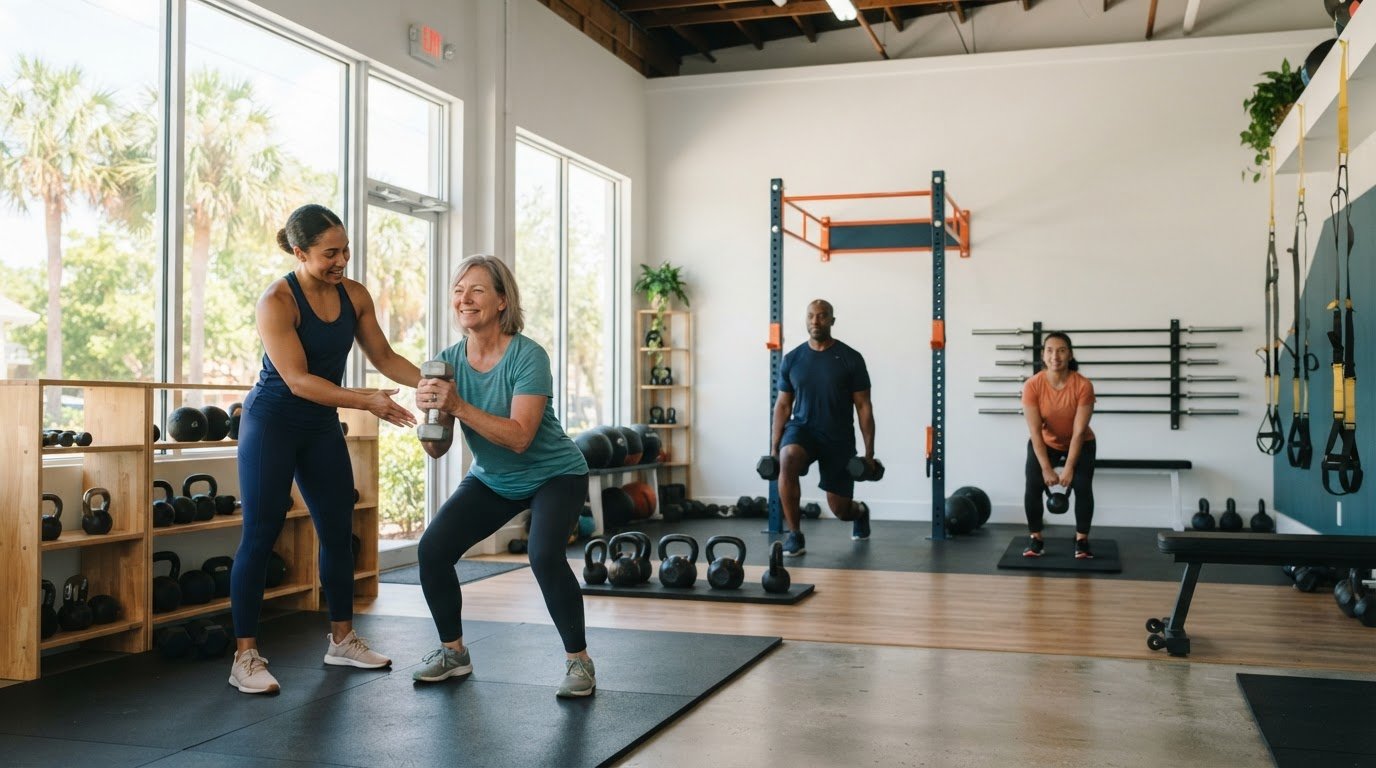
TrYumph Fitness offers Personal Training and Nutrition Coaching to help you build practical movement and eating habits around recovery and everyday life. Once your healthcare provider has cleared you to exercise, personal coaching can help you set manageable activity goals and adjust them as your strength returns. If you prefer shared encouragement, Small Group Training offers another way to work toward consistent exercise. Nutrition Coaching can help you plan balanced meals that fit your routine, including breastfeeding needs you’re managing with your healthcare provider.
Choose support that matches your next step, whether that’s moving more regularly, improving meal planning, or building accountability. Contact TrYumph Fitness or visit tryumphfitness.com to learn more.
Build a Routine That Grows With You
Your next step doesn’t need to be a dramatic reset. Choose one manageable habit for this week, such as planning a simple breakfast or making time for a comfortable walk. As it becomes part of your routine, build from there. Progress can come from consistency, not pressure to do everything at once.
If you’re considering how to lose baby weight postpartum in Largo, let your goals reflect the life you’re living now. TrYumph Fitness offers Personal Training, Small Group Training, and KidFit, giving you options to explore as your needs and family routine evolve. Support can make it easier to turn an intention into a steady next step.
Explore a training option with TrYumph Fitness and choose a starting point that feels right for you. Keep moving forward at your own pace. You’re building strength for more than the scale.
Frequently Asked Questions
When can I start exercising after birth?
After an uncomplicated vaginal birth, gentle movement may feel right when you’re ready, but get medical clearance before resuming an exercise routine. A practical first step is a short, comfortable walk, followed by noticing how your body responds. If you had a cesarean birth or complications, follow your clinician’s recovery and clearance advice before adding activity. Save high-impact exercise for after your postpartum checkup and a gradual return.
Postpartum Weight Loss: When Can You Start Dieting After Pregnancy?
Wait until your six-week checkup before actively trying to lose weight. That doesn’t mean you need to begin a strict diet then. Start with a manageable food routine, such as planning a filling breakfast and keeping a balanced snack ready for busy afternoons. If you’re breastfeeding, avoid drastic calorie cuts, especially before your baby is at least two months old and your milk supply has normalized.
Should postpartum clients focus on weight loss immediately?
No. Early postpartum priorities are recovery, strength, everyday function, and overall well-being. Choose a useful goal that isn’t tied to the scale, such as walking comfortably or lifting your baby with control. A simple daily note about energy, movement, and discomfort can help you recognize progress. Once recovery is established, gradual eating and activity habits can support weight goals without making weight the only measure of success.
Video: how can I lose my pregnancy weight sensibly?
A sensible approach pairs nourishing meals with gradual activity, rather than severe restriction or punishing workouts. Build meals with protein, whole grains, fruits, and vegetables, and choose movement that fits your recovery. If breastfeeding, protect your energy and avoid drastic calorie cuts before your milk supply has normalized. Treat progress as gradual, using comfortable movement and regular meals as practical markers alongside weight.
What is diastasis recti?
Diastasis recti is a separation of the rectus abdominis muscles that can happen during pregnancy. Think of the abdominal muscles as two sides of a zipper that may move apart as the belly expands. If your abdomen forms a pronounced ridge or dome during exercise, pause that movement and seek guidance. Choose controlled core work that doesn’t cause doming, pain, or pressure.
What should I be aware of before exercising?
Pay attention to how your body responds during activity and afterward. Stop exercising and follow up with a healthcare provider if you experience pain, dizziness, unusual bleeding, or pelvic heaviness or pressure. Leaking during exercise, persistent discomfort, or significant abdominal doming also deserve attention. Your joints and ligaments may remain more flexible for a few months after birth, so avoid forceful stretching and twisting while rebuilding movement.
What should early postpartum exercise programming include?
Begin with breathing mechanics, gentle core and pelvic floor activation, foundational movement patterns, and walking. For example, practice a relaxed breath, then try a controlled sit-to-stand before adding resistance. Progress only when each movement feels manageable and doesn’t bring symptoms. Delay high-impact activity, heavy spinal loading, and advanced abdominal exercises until your core and pelvic floor can support those demands.
What is a safe rate of postpartum weight loss after giving birth?
Think of the trend as a slow walk, not a sprint. If you’re breastfeeding, adequate food matters too: losing about 670 grams per week while breastfeeding should not affect milk supply or health. Track changes over time rather than reacting to one weigh-in.

Article by
Coach Matt O'Brien
Coach Matt O'Brien is the founder of TrYumph Functional Training and TrYumph KidFit, where he has helped thousands of adults, children, and families build stronger, healthier, and happier lives through science-based health coaching, personal training, and small group training since 1998. With more than 25 years of coaching experience and over 25,000 hours working one-on-one and in small-group settings, Matt specializes in helping busy adults improve strength, energy, weight loss, nutrition, and long-term health through practical, sustainable lifestyle change.
Matt is a National Board Certified Health & Wellness Coach (NBC-HWC), Certified Strength and Conditioning Specialist (CSCS), Precision Nutrition Level 1 Coach (PN1), and Master Health Coach. His expertise spans strength training, nutrition coaching, healthy habit formation, performance optimization, and healthy aging, helping clients build resilience and enjoy a higher quality of life for years to come. He is also the author of THE MAGIC PILL and FITNESS FUEL (Cookbook) and is passionate about translating complex health and longevity science into simple, actionable strategies that busy people can apply in everyday life.
Through TrYumph KidFit, Matt is equally committed to improving kids fitness, confidence, athletic development, and lifelong healthy habits by creating fun, encouraging environments where children can thrive physically, mentally, and socially.
Matt's coaching philosophy is built on simple beliefs: movement is medicine, consistency beats perfection, and sustainable habits create extraordinary results. His mission is to help people live longer, healthier, happier lives through coaching, community, and caring.
When he's not coaching at TrYumph, Matt enjoys spending time with his wife and two sons, continuing his education in health and longevity science, and creating educational content that empowers people to take control of their health.