Getting toned isn’t about avoiding weights; it’s about using them with a plan. Toning workouts for women in Largo can combine full-body resistance exercises performed two to three times per week. The goal is to build strength and support muscle definition, not to assume strength training will make you “bulk up.”
If you’re juggling work, family, and everything else, a routine needs to feel practical, not overwhelming. A personal trainer can tailor a full-body gym plan to your experience and goals, recommend how often to train and which equipment to use, and explain how toning differs from building more muscle. You’ll also get a clearer picture of how exercises fit together, so you can approach each session with purpose and confidence. Ahead, we’ll explore what a balanced routine can include, how a trainer can guide your choices, and what strength training can realistically do. A steady, supportive plan can make the gym feel more manageable, one workout at a time.
Key Takeaways
- Understand how strength training supports muscle definition, and how building more muscle depends on the training approach over time.
- A trainer can match exercises, equipment, and session frequency to your experience, goals, and busy schedule.
- Effective arm and core routines use focused strength exercises, with form and appropriate resistance guiding each movement.
- Progressive increases in challenge can build strength without making “bulking up” the automatic outcome.
- Explore a balanced mix of moves for your arms, legs, and core to create a well-rounded full-body routine.
Toning compared with muscle building
Nutrition and protein support muscle repair and adaptation after resistance exercise. For most people, the suggested protein range is 0.8-1 gram per pound of current body weight each day.
- Define what “toned” means to you. Toning usually describes a look: visible muscle shape alongside the amount of body fat covering it. It isn’t a separate kind of muscle. A more defined appearance can come from building muscle, changing body composition, or both. Set a practical goal, such as feeling stronger during daily tasks or noticing more definition in your arms.
- Use resistance exercises to build strength. Strength training challenges muscles, and repeated training can increase both strength and muscle size over time. For example, a routine might include squats for 4 sets of 8-10 repetitions and an inclined shoulder press for 3 sets of 10-12 repetitions. Those exercises work different muscle groups, rather than targeting a vague “toning” effect.
- Progress gradually instead of chasing exhaustion. Progressive overload means increasing the challenge over time, such as using a heavier weight or completing more repetitions with good form. Think of it as adding a little more to a backpack as you get stronger. Aim for a manageable next step, not a sudden jump that disrupts technique. A trainer can adjust the challenge as your ability changes.
- Match food intake to the goal. Protein provides building material muscles use during recovery, while overall energy intake also affects changes in body composition. A muscle-building approach isn’t a requirement for everyone seeking more definition. Keep meals practical and consistent with your training and personal needs.
- Separate muscle gain from “bulking up.” A strength routine can improve muscle definition without automatically causing large muscle gains. The degree of change depends on factors such as training challenge, consistency, food intake, and individual response. If you prefer a leaner-looking result, explain that goal clearly so exercise selection and progression reflect it. Strength is valuable even when size isn’t your priority.
How a trainer tailors workout frequency, duration, equipment, and level
Yes. A trainer can adapt bodyweight exercises for home sessions by adjusting movement choice, repetitions, and difficulty. The right plan depends on your experience, available space, and how the exercises feel.
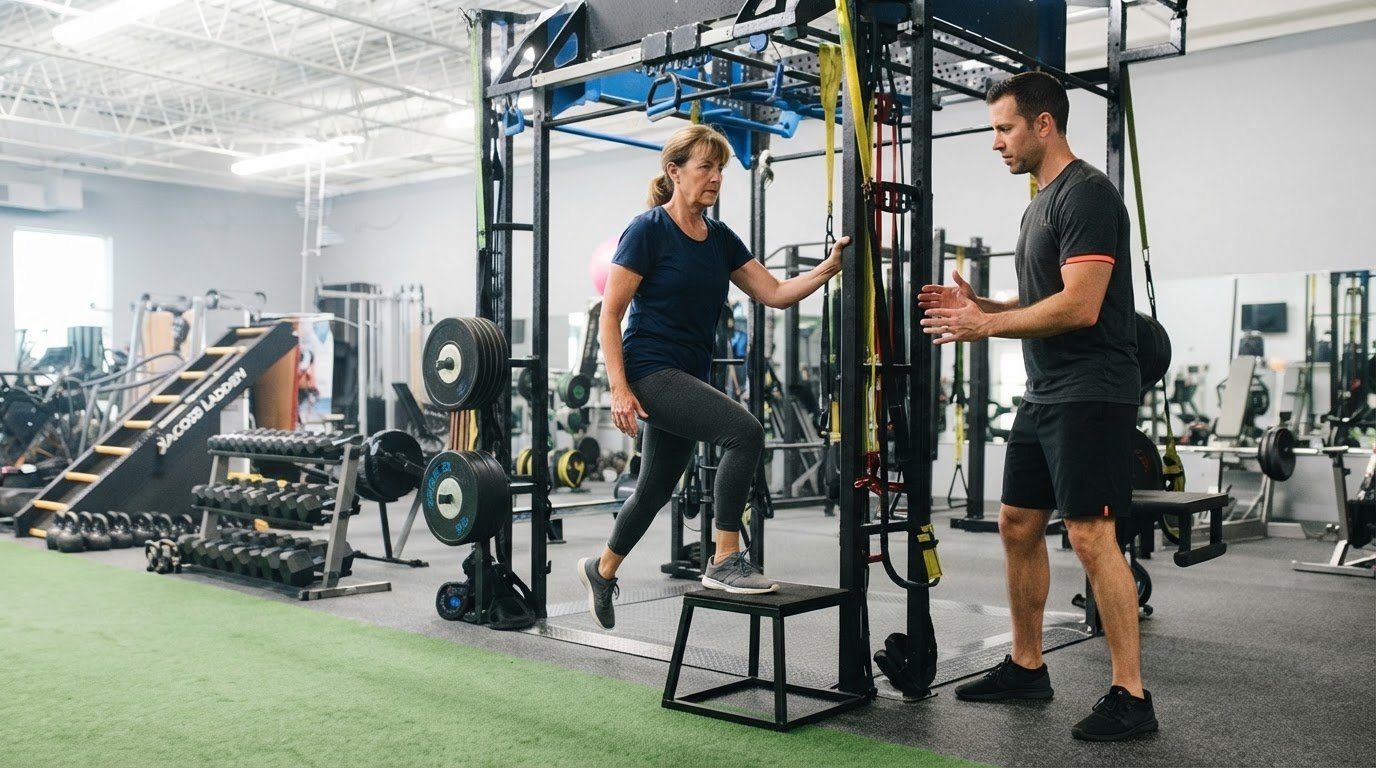
- Choose a weekly schedule that fits real life. A full-body routine can be repeated two to three times per week, while each muscle group should receive resistance training at least twice per week. A trainer can arrange sessions around work, parenting, and recovery days. For example, three weekly full-body sessions may be easier to maintain than separate sessions for every body area.
- Match session length to your available time. A suggested full-body workout takes 45-60 minutes, while an all-over circuit can be designed as a 15-minute option. A trainer can select the format that fits your calendar and training level. Shorter sessions still need a clear structure: exercises should cover the intended muscle groups, rather than using time on movements that don’t support your goal.
- Start at the right level. The suggested full-body plan is intended for beginner-to-intermediate exercisers. A trainer can choose movements that match your current ability, then adjust the challenge as you become more comfortable. For instance, bodyweight squats can be a starting point before adding resistance. Focus on controlled movement and appropriate effort, not on copying someone else’s pace.
- Use equipment with purpose. A full-body plan can use bodyweight movements, dumbbells, resistance bands, or machines. Each offers a different way to challenge muscles. A band can add resistance to a squat, while dumbbells can make a row or press more demanding. A trainer can select equipment based on your comfort, access, and the movements your routine needs.
- Keep cardio in its supporting role. Cardio can complement strength sessions, but it doesn’t replace resistance exercises when your goal includes muscle definition. A trainer can balance the two around your priorities and schedule, rather than packing every activity into every workout. If you’re unsure how a coached routine might fit your week, explore a guided training option as a next step.
- Adjust the plan as your routine develops. A trainer can review whether the chosen frequency, duration, and equipment remain practical. If a 45-60-minute session feels difficult to fit in, a 15-minute circuit may offer a more manageable format. If bodyweight work becomes too easy, changing the movement or adding resistance can raise the challenge without rebuilding the whole schedule.
Arm and stomach toning
- Pair arm exercises with core work. A trainer can include both areas in one session, rather than treating arms and stomach as separate goals. For example, press-ups challenge the arms and chest, while a forearm plank with arm extensions adds a core stability challenge. This pairing gives each exercise a purpose and helps the routine cover more than one movement pattern.
- Set a clear press-up target. The plan prescribes press-ups for 3 sets of 8-10 repetitions. A trainer can select a version that matches your current strength, then watch how your body moves through each repetition. If the prescribed range disrupts control, the trainer can adapt the exercise so you can focus on steady, consistent form instead of rushing to finish.
- Use controlled arm extensions in the plank. During a forearm plank, the plan recommends holding each arm extension for 5 seconds. A trainer can cue you to extend one arm, pause, and return it with control before switching sides. That brief hold gives the movement a clear rhythm. It also helps the trainer observe how well you maintain a steady position during each extension.
- Choose a manageable curl load. Lizbeth Simancas gives 2 sets of 12 repetitions as an example goal for bicep curls. For a 12-repetition set, a weight may be too easy if you could continue to 20 repetitions. It may be too hard if you can barely complete 8. A trainer can use that difference to adjust resistance toward a more suitable challenge.
- Keep the full routine balanced. Arm and stomach work belongs alongside exercises for other muscle groups. For instance, a trainer can combine curls and plank extensions with squats in a broader session. This creates a more complete routine than repeating arm movements alone. The trainer can adjust resistance and exercise selection as your ability changes, keeping the session aligned with your goals.
- Review movement quality before adding difficulty. A trainer can observe how each press-up, curl, or plank extension looks across the prescribed repetitions. If your form changes near the end of a set, the next adjustment may be a lighter resistance or an easier exercise version. If you stay controlled through all 12 curls, the trainer can assess whether the current load still provides a useful challenge.
Concerns about getting bulky
- Set expectations around gradual change. Strength training can increase muscle size, but that change develops over time. One estimate for an average intermediate woman is about half a pound of muscle per month. That figure describes an average, not a promise or a target. Your training history, consistency, food intake, and individual response all shape what you notice.
- Separate strength from a specific look. Becoming stronger doesn’t automatically mean developing a bulky appearance. A routine can improve how much you lift or how confidently you move, while visible changes develop more gradually. Think of strength as what your muscles can do, and definition as what you can see. Those outcomes are related, but they aren’t identical.
- Tell your trainer what worries you. If you’re concerned about your arms, waist, or thighs, mention those areas before the routine is set. That gives the trainer a clear starting point for discussing exercise selection and progression. For example, a beginner who wants stronger legs can include squats while explaining any concern about thigh size. The plan should reflect both goals.
- Understand what a squat does. Squats challenge the lower body, including the thighs, but they don’t dictate one fixed body shape. A trainer can adjust resistance and movement difficulty to match your current level. Beginners may start with bodyweight squats, then progress to a more challenging version as their control and strength improve.
- Keep muscle-building nutrition in context. A daily calorie surplus of 100 calories is suggested as a starting point for most women seeking muscle growth. That recommendation is aimed at muscle growth, not a requirement for every woman pursuing a toned appearance. Protein supports muscle repair after resistance exercise, while overall food intake influences whether body weight changes over time.
- Review how your routine feels and progresses. Notice practical changes, such as completing a familiar set with better control or handling everyday tasks more easily. If your routine feels out of step with your desired outcome, discuss the exercises, resistance, and eating pattern with your trainer. Specific feedback helps shape the next training block without assuming every change means unwanted bulk.
What strength-training exercises can a trainer use to help women tone their arms, legs, and core?
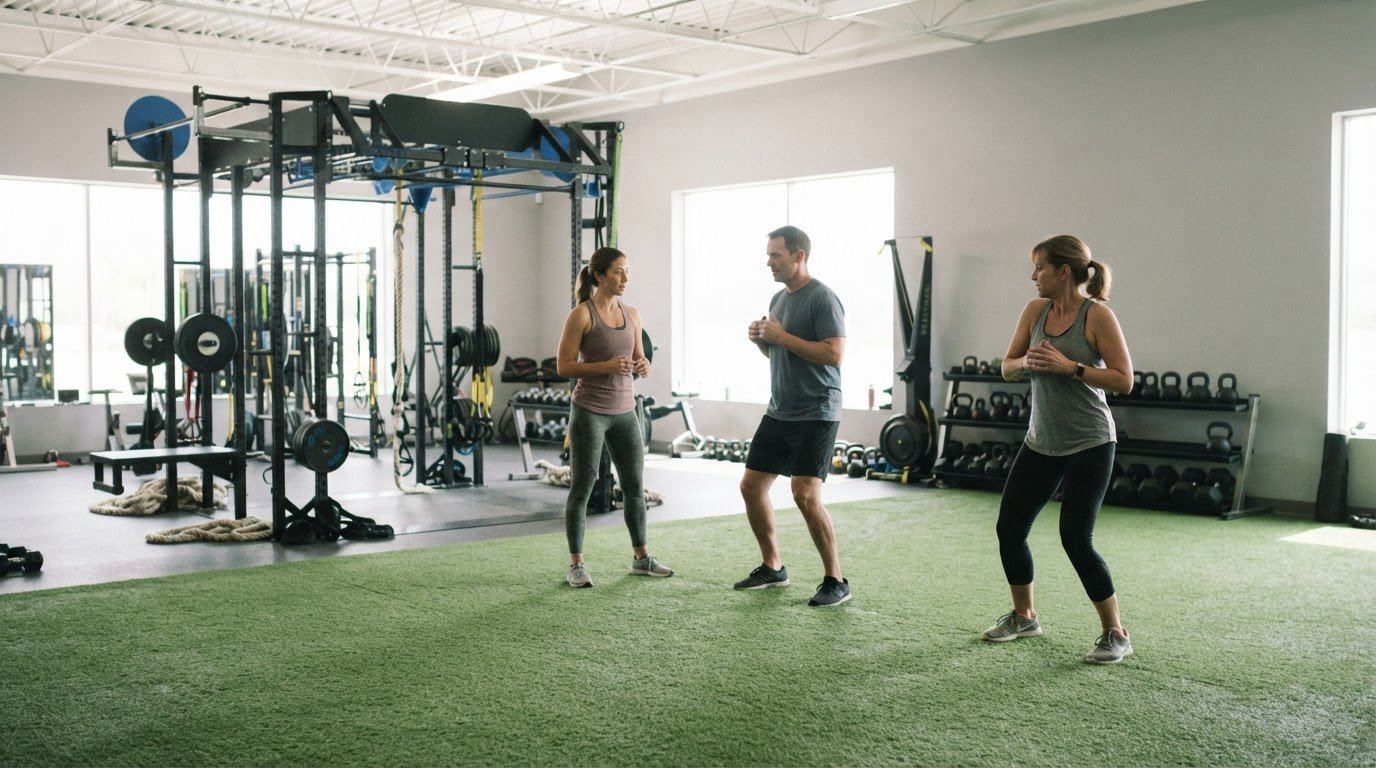
- Build the routine around four selected moves. An all-over circuit uses four moves chosen to cover different areas rather than repeat one exercise. A trainer can select lower-body, upper-body, and core options, then adjust resistance and movement difficulty to your experience. This keeps the session focused and makes it easier to see which movements challenge each area.
- Use resistance band squats for lower-body work. The plan recommends 20-25 repetitions per round and 3-4 rounds. A trainer can position this movement alongside other exercises, rather than making every set a squat. The band adds resistance as you move, while the trainer can observe your control and adjust the exercise to suit your current level.
- Add a balance-focused leg option. Single-leg deadlifts are prescribed for 15-20 repetitions per round and 3-4 rounds. A trainer can use this exercise to include single-leg movement in a routine. Hamstring T curls offer another option, with 10-15 repetitions per side. The trainer can choose between them based on the session’s purpose and your ability to maintain control.
- Include movements for the arms and upper body. Rotation rows use a pair of dumbbells for 10-15 repetitions. Ballet calf-raises are prescribed for 10-15 repetitions, giving a trainer another lower-leg option. These examples show how a session can mix equipment and movement types. A trainer can decide which exercises best complement your other planned work.
- Choose a core movement with a clear target. The opposite arm leg crunch calls for 10 repetitions on each side. A scissor bridge description recommends moving each leg out to the side and back to center at least 10 times. A trainer can select one of these options and coach a steady pace, helping you focus on completing each movement with control.
- Vary the pattern without losing the plan. A squat with side leg raise combines 10 squats and side leg raises on each side. Side-lying circle leg raises call for 10 circles in each direction before switching sides and legs. Windmills use a pair of dumbbells for 20 repetitions. A trainer can rotate among these options as the routine develops, while keeping the session organized around your goals.
Want a professional to help shape a balanced routine? Explore a guided training option and take a clear next step toward stronger movement.
TrYumph Fitness
TrYumph Fitness can help turn your toning goals into a practical plan that fits your life. If you’re unsure which exercises to prioritize, how to progress, or how nutrition supports training, coaching can give you a clear starting point. Personal & Small Group Training offers guidance and accountability, while TrYumph’s all-inclusive nutrition, fitness, and weight-loss programs bring these elements together. The focus is building strength and consistency around your goals, not following a one-size-fits-all plan.
Consider reaching out when you want guidance choosing movements, adjusting your routine, or balancing workouts with a busy schedule. Contact TrYumph Fitness to discuss a supportive next step for your fitness goals.
Take Your Next Step Toward Stronger Training
Your next step doesn’t need to be a major life overhaul. Choose a routine that fits your schedule, then give yourself room to build confidence and consistency. If you’re considering toning workouts for women in Largo, professional support can help turn your goals into a plan that feels manageable and personal.
TrYumph Fitness offers Personal & Small Group Training for adults looking for guidance and accountability, along with all-inclusive nutrition, fitness, and weight-loss programs. KidFit can help families include movement in their routine, too. The right starting point depends on the support that fits your life and what you want to work toward.
Ready to explore a supportive next step? Contact TrYumph Fitness to discuss your fitness goals. You can begin with a conversation, clarify what matters most, and move forward at a pace that feels right for you. Stronger habits start with one thoughtful step.
Frequently Asked Questions
How can a personal trainer help you get toned?
A personal trainer can observe how you move and make your routine more specific to your goals. For example, if a shoulder press feels awkward, the trainer can assess your position and choose a more suitable variation. They can also help you notice progress in practical ways, such as better control during a familiar movement. That feedback can make training easier to understand and adjust.
Does cardio help with toning up?
Cardio can support overall fitness and complement strength training. A trainer can help you choose an activity you can sustain, such as brisk walking or cycling, and fit it around your other exercise. If you enjoy cardio, that preference can make your broader routine more practical. Choose an activity that suits your goals and circumstances, rather than adding one simply because it seems obligatory.
How long does it take to see toning results?
Progress can show up in how exercise feels before it becomes obvious in the mirror. You might notice steadier movement, improved control, or greater confidence with an exercise. A trainer can help you track these changes alongside how your clothes fit and how you feel during daily activities. Looking at several signs gives a fuller picture than judging progress by one workout or one day.
How often might a trainer recommend that women train to tone up?
A trainer considers your current activity, available time, exercise experience, and how well you recover between sessions. For example, a demanding workweek may call for a simpler schedule than a quieter period. The trainer can also account for walks, sports, or other physical activities already in your routine. That way, the plan reflects your real week instead of adding workouts without considering what you already do.
Toning vs building muscle: what's the difference?
“Toning” commonly describes a visual goal, while muscle building describes changes in muscle size and strength. The terms can overlap, but they don’t describe separate types of exercise. A trainer can clarify what you mean by a toned appearance, then shape training around that preference. Describing your goal clearly helps avoid a plan built on assumptions.
What About Weight Training?
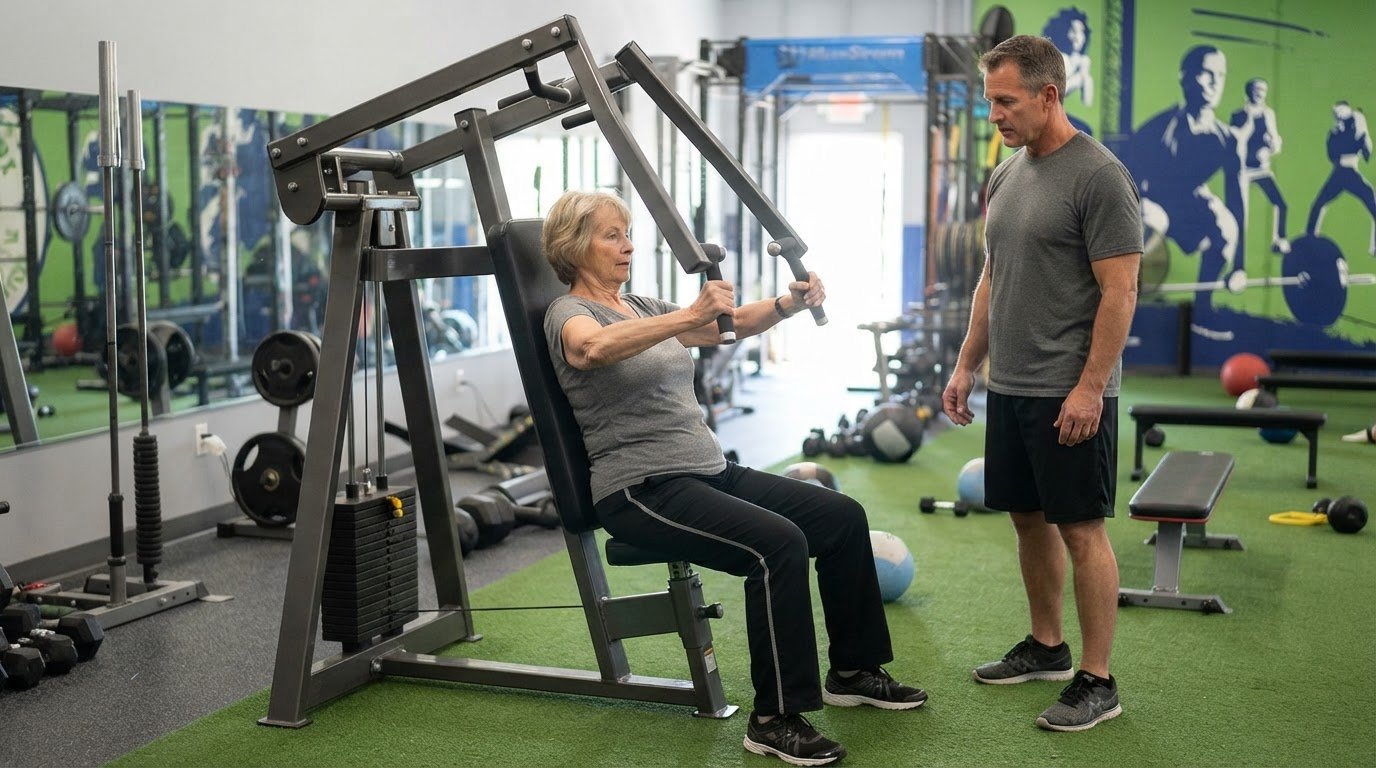
Weight training can be part of a well-rounded strength routine, with equipment chosen to match the movement. A trainer might use a cable machine for a pulling exercise or dumbbells for a press, depending on your comfort and the session’s focus. You don’t need to choose equipment based on how intimidating it looks. Clear instruction can make unfamiliar tools easier to approach.
What toning workouts can a trainer provide for women?
A trainer can create a routine using different movement patterns, such as pushing, pulling, bending, and stabilizing. Exercise choices can reflect your preferences and available equipment. For example, a trainer may offer a machine-based option if free weights feel unfamiliar, or modify a movement if a particular exercise doesn’t suit you. The goal is a useful, understandable plan, not a list of trendy moves.
How many days a week might a trainer recommend that women strength train for toning?
The weekly structure depends on how strength training fits with your commitments and other activities. A trainer can consider work hours, family responsibilities, preferred workout style, and energy levels before organizing sessions. If your week changes often, discuss that upfront so the trainer can build a flexible plan with alternatives for busy days. The most useful schedule is one that fits your routine and can adapt as circumstances shift.

Article by
Coach Matt O'Brien
Coach Matt O'Brien is the founder of TrYumph Functional Training and TrYumph KidFit, where he has helped thousands of adults, children, and families build stronger, healthier, and happier lives through science-based health coaching, personal training, and small group training since 1998. With more than 25 years of coaching experience and over 25,000 hours working one-on-one and in small-group settings, Matt specializes in helping busy adults improve strength, energy, weight loss, nutrition, and long-term health through practical, sustainable lifestyle change.
Matt is a National Board Certified Health & Wellness Coach (NBC-HWC), Certified Strength and Conditioning Specialist (CSCS), Precision Nutrition Level 1 Coach (PN1), and Master Health Coach. His expertise spans strength training, nutrition coaching, healthy habit formation, performance optimization, and healthy aging, helping clients build resilience and enjoy a higher quality of life for years to come. He is also the author of THE MAGIC PILL and FITNESS FUEL (Cookbook) and is passionate about translating complex health and longevity science into simple, actionable strategies that busy people can apply in everyday life.
Through TrYumph KidFit, Matt is equally committed to improving kids fitness, confidence, athletic development, and lifelong healthy habits by creating fun, encouraging environments where children can thrive physically, mentally, and socially.
Matt's coaching philosophy is built on simple beliefs: movement is medicine, consistency beats perfection, and sustainable habits create extraordinary results. His mission is to help people live longer, healthier, happier lives through coaching, community, and caring.
When he's not coaching at TrYumph, Matt enjoys spending time with his wife and two sons, continuing his education in health and longevity science, and creating educational content that empowers people to take control of their health.